Connect with us

Business

AI Stocks Fall as Top Tech Leaders Call for Slower AI Development

Published

on

AI-related stocks came under pressure this week after several leading technology executives called for a slower and more cautious approach to the development of advanced artificial intelligence. The comments raised concerns among investors that a slowdown could reduce spending on powerful chips, data centers and other infrastructure that has helped drive the AI market.

The latest debate began after Anthropic CEO Dario Amodei called for the AI industry to “pace the frontier” and slow the development of its most advanced models. Amodei has warned that increasingly capable AI systems could create serious safety risks if the technology develops faster than effective safeguards.

The proposal received support from other major technology figures, including OpenAI CEO Sam Altman and xAI chief Elon Musk. The unusual agreement between leaders of competing AI companies added weight to the discussion and made investors reconsider how quickly AI infrastructure spending can continue to grow.

AI Stocks Take a Hit

The market reaction was immediate. Asian technology stocks fell sharply, with South Korea’s Kospi index dropping 3.3%. SoftBank, a major investor in OpenAI, also suffered a significant decline. Chipmaker SK Hynix fell more than 6%, while European semiconductor company ASML also moved lower.

In the United States, major chip companies were also affected. Nvidia shares fell about 3%, while AMD dropped around 4% and Intel declined about 6% during Monday’s trading. The Philadelphia Semiconductor Index also suffered a significant decline.

The concern among investors is not necessarily that AI is ending. Instead, markets are worried that a slower pace of development could reduce the enormous demand for computing power that has benefited semiconductor manufacturers and data-center companies.

For several years, companies have spent billions of dollars building AI infrastructure. Nvidia and other chipmakers have benefited from this investment as technology companies compete to develop increasingly powerful AI models.

Safety Concerns Behind the Debate

The calls for slower development are largely connected to concerns about AI safety. Amodei has argued that increasingly capable AI agents could eventually operate with significant independence and create risks that are difficult for humans to control. His proposal includes stronger independent testing and oversight of advanced AI systems.

Supporters say a more careful approach could give governments and researchers additional time to develop safety standards before AI systems become significantly more powerful.

However, not everyone believes companies will actually slow down. AI firms are competing against one another as well as against companies in China, creating strong pressure to continue developing new models.

Microsoft AI chief Mustafa Suleyman has also argued for caution while saying the industry still needs to keep developing the technology. This highlights the difficult balance between innovation, competition and safety.

What Comes Next?

The recent stock declines do not necessarily mean the long-term AI boom is over. Analysts remain divided about whether the market reaction represents a temporary correction or the beginning of a broader change in AI investment.

Investors will likely continue watching AI spending, chip demand and government regulation closely. If companies continue investing heavily in AI infrastructure, semiconductor stocks could recover. But if development slows substantially, some of the companies that have benefited most from the AI boom could face additional pressure.

For now, the message from several AI leaders is clear: the technology should continue advancing, but at a pace that gives safety measures and oversight more time to catch up.

Continue Reading
Click to comment

Leave a Reply

Your email address will not be published. Required fields are marked *

Business

U.S. Poverty Rate Remained Stable Before Trump’s Safety Net Cuts Took Effect

Published

on

Photo: chatgpt

The latest U.S. Census Bureau data show that the country’s poverty picture remained relatively steady in 2025 under the broader Supplemental Poverty Measure, even as major changes to federal safety-net programs were enacted. The data provide an important snapshot of household economic conditions before many of the changes to programs such as Medicaid and SNAP have had their full effect.

The Census Bureau reported on September 15 that the official U.S. poverty rate fell from 10.6% in 2024 to 10.2% in 2025. About 34.5 million people were below the official poverty line. At the same time, the Supplemental Poverty Measure, which takes government benefits, taxes and certain expenses into account, stood at 13.1% in 2025, statistically unchanged from 2024.

The difference between the two measures is important. The official poverty measure primarily compares pretax money income with poverty thresholds. The Supplemental Poverty Measure is broader and includes the effects of programs such as SNAP, as well as tax credits, medical expenses and housing costs.

What the New Data Show

The 2025 figures also showed some improvements in household finances. Real median household income increased to $87,460, the highest level recorded by the Census Bureau since it began tracking the measure in 1967. The official poverty rate for children also declined to 13.4%, a historic low.

Social Security remained the largest single antipoverty program measured under the SPM. According to the Census Bureau, it moved 28.8 million people out of SPM poverty in 2025.

However, these numbers largely describe conditions in 2025. They do not fully capture the future effects of federal policy changes enacted under President Donald Trump.

Changes to Safety-Net Programs

The 2025 reconciliation law changed eligibility, financing and other rules for Medicaid and SNAP. The Congressional Budget Office estimates that the Medicaid provisions will reduce Medicaid enrollment by about 13.1 million people by 2035 compared with its baseline projection. The agency also estimates that changes to SNAP will reduce federal spending on the program and lower participation and average benefits over the coming years.

CBO has also estimated that the law’s changes to federal and state in-kind benefits, primarily Medicaid and SNAP, will reduce resources available to households at the lower end of the income distribution.

The timing matters because many of these changes are being implemented over several years. Therefore, the latest Census figures should not be interpreted as a measurement of their eventual impact.

What Could Happen Next?

The future direction of poverty will depend on several factors, including employment, wages, inflation, household expenses and participation in government programs. Changes to Medicaid and SNAP could affect household resources as new eligibility rules and other provisions take effect.

The Census Bureau’s latest report therefore provides a baseline for understanding economic conditions before the full effects of these policy changes appear in annual poverty statistics.

For now, the data show a mixed picture: the official poverty rate declined in 2025, while the broader Supplemental Poverty Measure remained statistically unchanged. Future Census reports will provide more information about how changes in government assistance and household finances affect poverty across the United States.

Continue Reading

Business

Why More U.S. Refineries May Not Bring Down Gas Prices

Published

on

Photo: chatgpt

President Donald Trump has been pushing for more oil refining capacity in the United States as gasoline and diesel prices remain high. But building more refineries may not provide the quick relief many drivers are hoping for.

The main reason is that U.S. refineries are already operating close to their limits. The refining sector has been running at around 98% capacity, leaving relatively little spare capacity that can be used immediately to increase fuel production.

The Trump administration is considering ways to expand U.S. refining capacity, including the possible use of the Defense Production Act. Discussions with oil companies have focused not only on building new facilities but also on improving existing refineries and expanding their operations. No final decision has been made.

However, constructing a large new refinery is a long and expensive process. It requires major investment, environmental reviews, permits, equipment and years of construction. That means even if the government supports new projects today, they would not add significant fuel supplies to the market in the short term.

There is also another important problem: the current increase in gasoline prices is not simply caused by a lack of U.S. refineries.

Global oil markets have been heavily affected by the ongoing conflict involving Iran and disruptions around important shipping routes. Oil prices recently moved above $100 a barrel, while concerns about supplies through the Strait of Hormuz have added pressure to global energy markets.

The price of crude oil is one of the biggest factors affecting what Americans pay at the pump. More refining capacity could help increase the supply of gasoline and other fuels over time, but it cannot immediately solve a shortage of crude oil or problems affecting international transportation.

U.S. fuel prices have already climbed sharply this year. The national average for regular gasoline reached about $4.22 per gallon in early September, while diesel prices also reached record levels. Diesel is especially important because trucks, ships and other forms of transportation rely heavily on it. Higher diesel costs can eventually increase the prices of food and other goods.

There is still a potential long-term benefit to expanding refining capacity. Additional capacity could give the United States more flexibility during future supply disruptions and reduce some of the pressure created when refineries unexpectedly shut down.

But increasing refinery capacity is unlikely to be a quick solution for today’s high gas prices. Even existing plants are operating at very high levels, and global oil supply problems remain a major factor.

For drivers, the biggest relief may ultimately depend on what happens to global crude oil supplies and the conflicts disrupting energy markets. Until those pressures ease, simply adding more U.S. refining capacity may not be enough to bring gasoline prices down quickly.

Continue Reading

Business

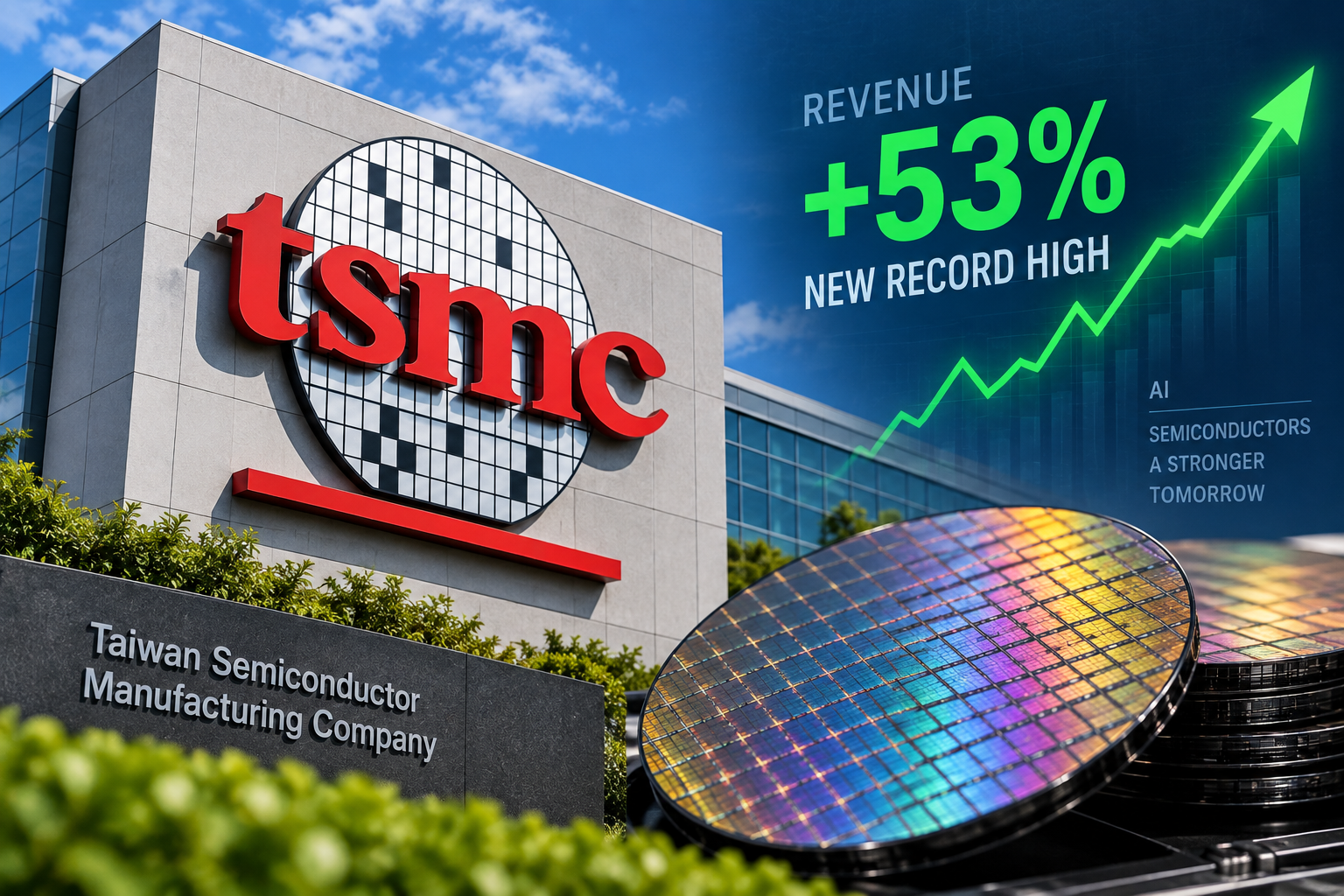
TSMC August Sales Soar More Than 53% to a New Record High

Published

on

Taiwan Semiconductor Manufacturing Company (TSMC), the world’s largest contract chipmaker, is continuing to benefit from strong demand for advanced semiconductors as the global artificial intelligence boom drives spending on computing infrastructure.

TSMC has become one of the most closely watched companies in the semiconductor industry because it manufactures advanced chips used by major technology companies. Demand from artificial intelligence, high-performance computing and next-generation devices has helped push the company’s revenue to record levels in 2026.

The company had already reported record monthly revenue in July. TSMC’s July revenue reached NT$467.58 billion, an increase of 44.7% from the same month a year earlier and 5.6% higher than June. Revenue for the first seven months of 2026 reached NT$2.87 trillion, up 37% year over year.

The strong July performance followed several months of rapid growth. TSMC’s revenue increased 67.9% year over year in June, while May revenue was up 30.1%. The company has therefore maintained strong momentum as customers continue to invest heavily in advanced computing and AI-related products.

Artificial intelligence remains one of the biggest drivers behind the semiconductor boom. Companies developing AI systems need powerful processors and large amounts of computing capacity, increasing demand for advanced chips. TSMC manufactures many of these chips for major technology customers and has been expanding its production capacity to keep up with orders.

The company has also increased its investment plans. TSMC’s board approved a capital budget of about US$29.44 billion in August for advanced manufacturing capacity, advanced packaging and other production facilities. The investment reflects the company’s expectation that demand for leading-edge chips will remain strong.

TSMC’s second-quarter results also showed the strength of the business. Revenue for the quarter reached approximately NT$1.27 trillion, while net income was about NT$706.56 billion. The company’s strong margins and profits demonstrated the high value of its advanced chip manufacturing business.

The company is also expanding outside Taiwan. TSMC has been investing heavily in new semiconductor factories in the United States, Japan and Europe. Its expansion is designed to increase production capacity while giving major customers more geographically diversified supply chains.

Investors will be watching the August revenue figures closely because they provide another indication of whether the AI-driven semiconductor boom is continuing at its current pace. TSMC’s financial calendar scheduled the August monthly sales announcement for September 10, 2026.

With demand for AI infrastructure still growing, TSMC remains at the center of the global semiconductor industry. Its ability to manufacture increasingly advanced chips makes the company an important supplier for the world’s largest technology businesses.

Continue Reading

Trending

Copyright © 2017 Zox News Theme. Theme by MVP Themes, powered by WordPress.