Connect with us

Politics

Poll: Virginia governor’s race in dead heat

Quis autem vel eum iure reprehenderit qui in ea voluptate velit esse quam nihil molestiae consequatur, vel illum qui dolorem.

Published

on

Photo: Shutterstock

At vero eos et accusamus et iusto odio dignissimos ducimus qui blanditiis praesentium voluptatum deleniti atque corrupti quos dolores et quas molestias excepturi sint occaecati cupiditate non provident, similique sunt in culpa qui officia deserunt mollitia animi, id est laborum et dolorum fuga.

Quis autem vel eum iure reprehenderit qui in ea voluptate velit esse quam nihil molestiae consequatur, vel illum qui dolorem eum fugiat quo voluptas nulla pariatur.

Temporibus autem quibusdam et aut officiis debitis aut rerum necessitatibus saepe eveniet ut et voluptates repudiandae sint et molestiae non recusandae. Itaque earum rerum hic tenetur a sapiente delectus, ut aut reiciendis voluptatibus maiores alias consequatur aut perferendis doloribus asperiores repellat.

Lorem ipsum dolor sit amet, consectetur adipisicing elit, sed do eiusmod tempor incididunt ut labore et dolore magna aliqua. Ut enim ad minim veniam, quis nostrud exercitation ullamco laboris nisi ut aliquip ex ea commodo consequat.

“Duis aute irure dolor in reprehenderit in voluptate velit esse cillum dolore eu fugiat”

Nemo enim ipsam voluptatem quia voluptas sit aspernatur aut odit aut fugit, sed quia consequuntur magni dolores eos qui ratione voluptatem sequi nesciunt.

Et harum quidem rerum facilis est et expedita distinctio. Nam libero tempore, cum soluta nobis est eligendi optio cumque nihil impedit quo minus id quod maxime placeat facere possimus, omnis voluptas assumenda est, omnis dolor repellendus.

Nulla pariatur. Excepteur sint occaecat cupidatat non proident, sunt in culpa qui officia deserunt mollit anim id est laborum.

Sed ut perspiciatis unde omnis iste natus error sit voluptatem accusantium doloremque laudantium, totam rem aperiam, eaque ipsa quae ab illo inventore veritatis et quasi architecto beatae vitae dicta sunt explicabo.

Neque porro quisquam est, qui dolorem ipsum quia dolor sit amet, consectetur, adipisci velit, sed quia non numquam eius modi tempora incidunt ut labore et dolore magnam aliquam quaerat voluptatem. Ut enim ad minima veniam, quis nostrum exercitationem ullam corporis suscipit laboriosam, nisi ut aliquid ex ea commodi consequatur.

Politics

How Trump Reshaped a Refugee Bureau Into a $410 Million Deportation Operation

Published

on

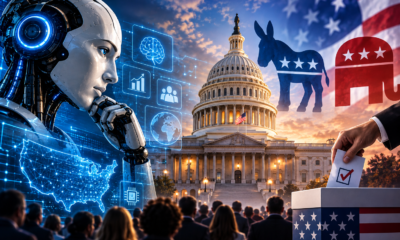
Photo: chatgpt

The Trump administration has significantly changed the role of a U.S. State Department bureau traditionally focused on refugees and humanitarian assistance. According to an investigation by The Washington Post, the Bureau of Population, Refugees and Migration has been given a new role in supporting deportations of migrants to countries where they are not citizens.

At the center of the change is the Office of Remigration, a small division within the bureau. The office has been involved in negotiating and supporting agreements with foreign governments willing to accept migrants deported from the United States. These arrangements are commonly described as “third-country” deportations.

Internal U.S. government records reviewed by The Washington Post show that the administration had authorized or pledged at least $410 million to facilitate agreements with 31 countries as of the end of June. The money includes payments to foreign governments and funding for international organizations involved in migration assistance.

The agreements vary from country to country. Some involve migrants who cannot legally be returned to their home countries because of concerns about persecution or other legal protections. Others involve people with final removal orders whose countries of origin will not accept them.

The administration argues that third-country deportations provide another way to carry out removal orders. White House officials have said the policy is intended for migrants who have no legal right to remain in the United States, including some people whose home countries refuse to accept them.

The policy has also generated legal challenges. On September 18, a federal appeals court largely upheld a lower-court ruling that found the administration’s third-country deportation policy unlawful because migrants were not given adequate notice and an opportunity to raise concerns about being sent to particular countries. The administration is expected to continue challenging the ruling.

The issue has attracted attention because of the transformation inside the State Department. The Bureau of Population, Refugees and Migration historically worked on refugee resettlement, humanitarian assistance and programs supporting displaced people. Under the Trump administration, resources and personnel have increasingly been directed toward migration removal efforts. The Washington Post reported that $250 million was redirected from refugee aid programs to support a voluntary-return initiative known as Project Homecoming.

More than 25,000 people have reportedly been deported to third countries under the broader network of agreements, although most were sent to Mexico. Other destinations have included countries in Africa and Latin America.

The arrangements have raised concerns among immigration lawyers and former government employees about legal protections and conditions faced by deportees. Supporters of the policy, meanwhile, argue that the government needs practical options for removing people who cannot be returned directly to their countries of origin.

The developments mark a major shift in how the State Department’s refugee and migration resources are being used. As legal challenges continue, the future of third-country deportations will depend partly on court decisions and the administration’s ability to maintain agreements with foreign governments.

Continue Reading

Politics

The Growing Power of AI Could Reshape American Politics

Published

on

Photo: chatgpt

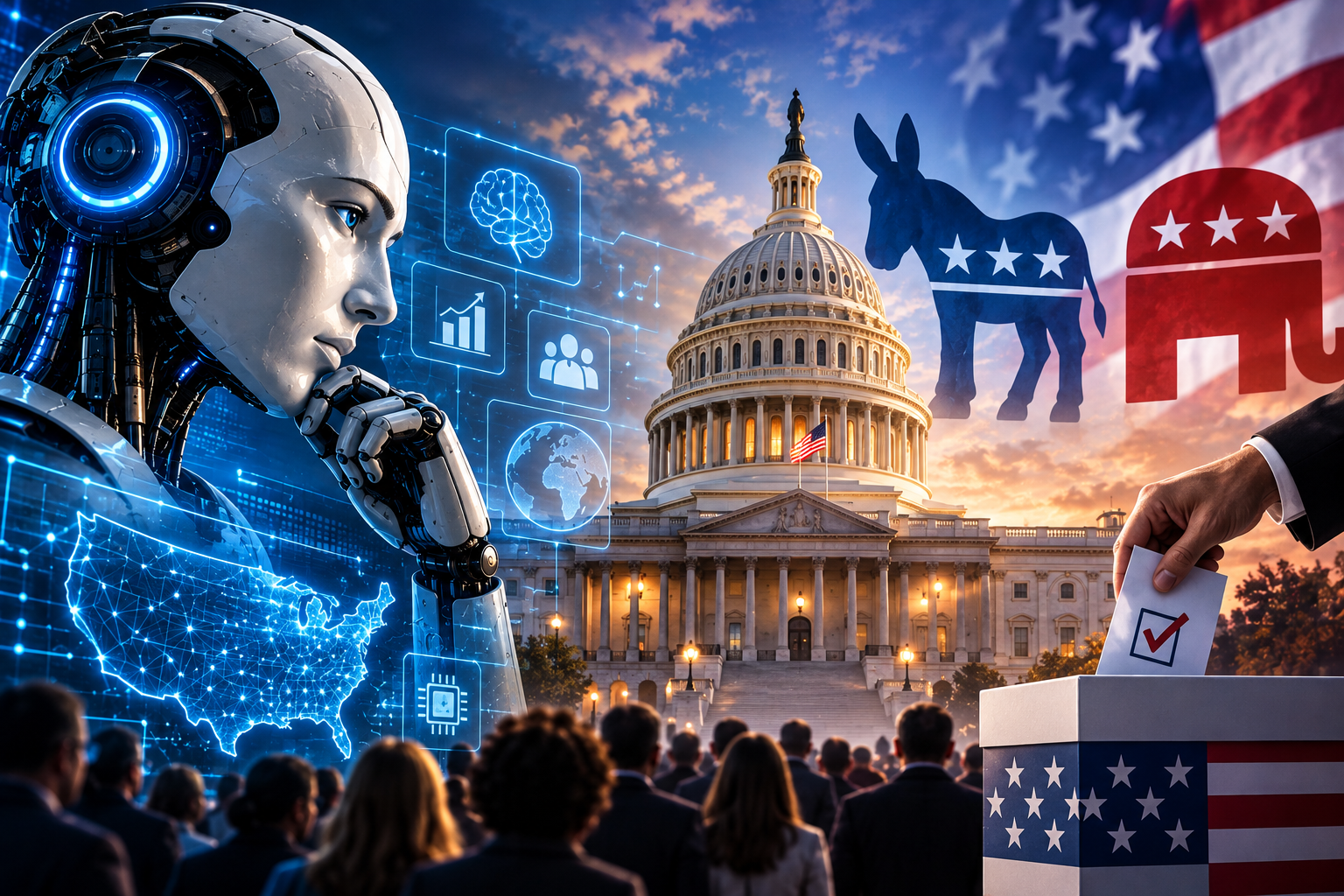
Artificial intelligence is quickly becoming more than a technology issue in the United States. As the 2026 midterm elections approach, AI is emerging as an important political topic that could influence voters, campaign strategies, government policy and even the future of American democracy.

Candidates from both major political parties are increasingly talking about artificial intelligence, particularly its impact on jobs, the economy, national security and data centers. A Washington Post analysis found that hundreds of House, Senate and gubernatorial candidates have taken positions on AI-related policies, making the technology an issue in nearly 40% of races across the country.

One of the biggest concerns is the use of AI-generated political content. Modern AI tools can create realistic videos, photographs and voices that make it possible to place politicians in situations that never happened. These so-called deepfakes can be used in campaign advertising and social media posts, making it increasingly difficult for voters to quickly determine what is real.

The problem is already appearing during the 2026 election cycle. AI-generated political advertisements have become increasingly common, including campaign material that uses fabricated video of political opponents. Experts warn that even when people know a video is fake, repeated exposure to AI-generated content can reduce confidence in political information overall.

States are responding in different ways. According to the National Conference of State Legislatures, dozens of states have enacted laws addressing AI-generated election content. Some laws require political campaigns to disclose when AI has been used, while others restrict deceptive deepfakes during specific periods before elections.

AI is also becoming a political issue because of its effect on jobs. Supporters say the technology could increase productivity, create new industries and help businesses grow. Critics worry that automation could replace workers in areas such as customer service, administration, media and other industries.

Data centers are another growing concern. Powerful AI systems require enormous computing infrastructure and large amounts of electricity. Communities are therefore debating whether new data centers should be built, how much energy they should use and who should pay for the infrastructure needed to support them.

The political influence of the AI industry is growing as well. Companies and investors connected to artificial intelligence have become major sources of campaign spending during the 2026 midterms. Reuters reported that AI companies and their executives are using political groups and super PACs to support candidates and influence debates over future technology regulations.

At the federal level, the Trump administration has already presented a national AI legislative framework focused on maintaining U.S. leadership in artificial intelligence while addressing issues involving public trust, economic competitiveness and national security.

At the same time, lawmakers are facing pressure to introduce stronger safety rules. OpenAI has called for mandatory national AI safety requirements, while researchers and other technology leaders have warned that increasingly powerful AI systems could create serious security risks if they are not properly controlled.

The political debate is therefore becoming much broader than simply whether America should regulate AI. It now includes questions about free speech, election integrity, employment, national security, corporate power and America’s position in the global technology race.

As AI continues to develop, politicians will have to decide how quickly government should respond. The choices made during the current election cycle could influence technology policy for years to come.

For voters, the growing role of AI means understanding not only what the technology can do, but also how politicians plan to control, regulate and use it. The 2026 elections may become an important turning point in determining America’s approach to artificial intelligence.

Continue Reading

Politics

Trump Takes Center Stage as Republicans Prepare for the 2026 Midterms

Published

on

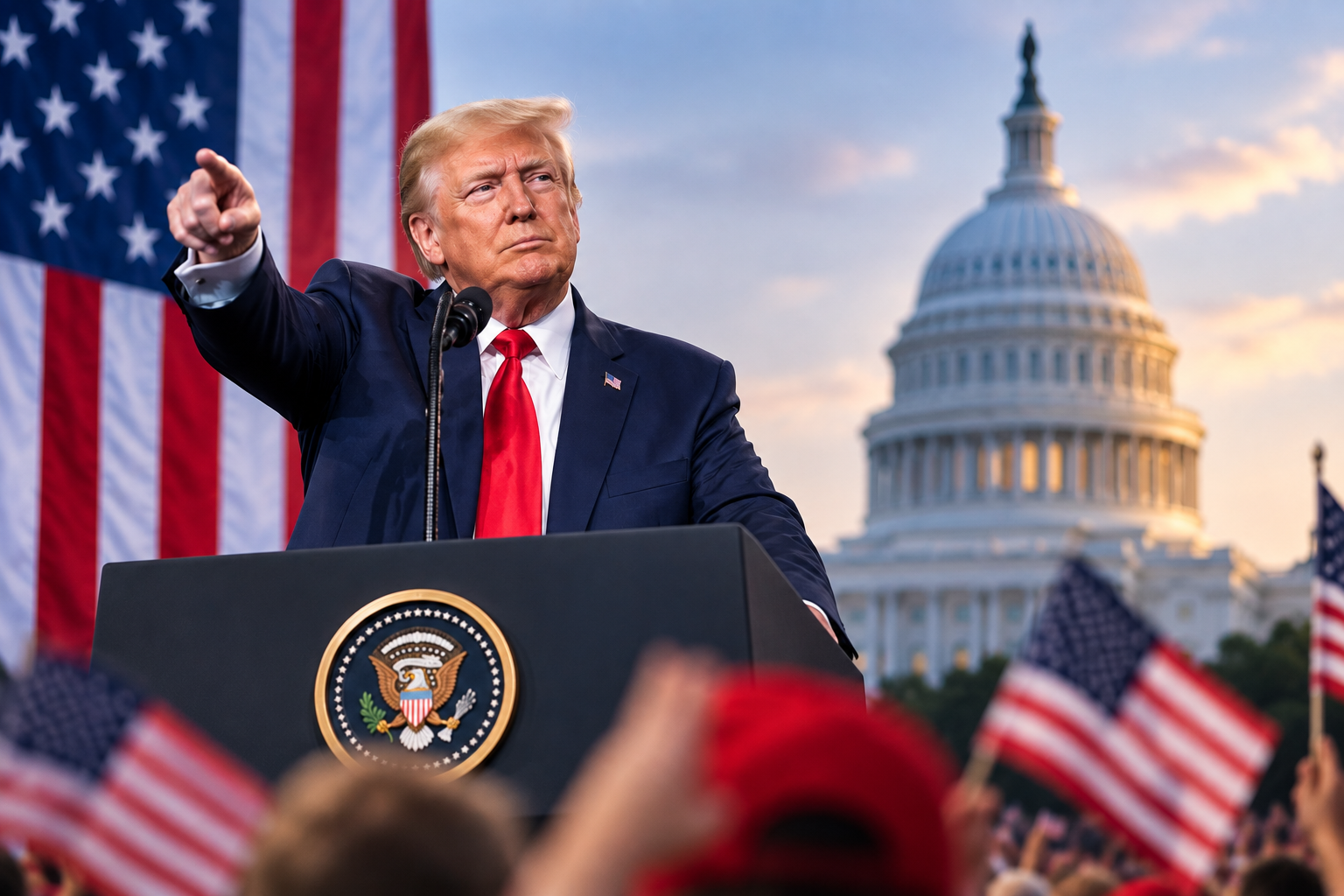
President Donald Trump is once again at the center of the Republican Party’s campaign as the 2026 midterm elections approach. With Republicans fighting to maintain control of Congress, the party is putting Trump’s political influence and support among his base at the heart of its strategy.

The focus was clear this week in Dallas, where Republicans held an unusual two-day national midterm convention. The event, held on September 9 and 10, is the first of its kind for the party and was designed to energize Republican voters and promote candidates ahead of the November 3 elections.

Trump played a major role at the gathering, appearing as the main attraction as Republicans attempted to present a united front. His keynote speech on Wednesday focused heavily on his administration’s record and the need for Republicans to win both chambers of Congress.

During his address, Trump also promised a major financial incentive for voters, saying adult Americans would receive $5,000 if Republicans win both the House and Senate. The proposal would cost more than $1 trillion if fully implemented, and questions remain about how such payments could legally and financially work.

The convention is an important test for Trump and the Republican Party. Midterm elections are traditionally difficult for the party controlling the White House, and Republicans currently face concerns about the economy, the cost of living and Trump’s approval ratings. Democrats are hoping these issues will help them regain control of at least one chamber of Congress.

Republican leaders, however, believe Trump’s ability to motivate his supporters can help overcome those challenges. His political rallies and direct communication style have remained central to the modern GOP, and many Republican candidates continue to seek his endorsement.

At the Dallas convention, Trump also promised to campaign for Republican candidates in important races. He specifically pledged to return to Texas to support Attorney General Ken Paxton, demonstrating how the president is becoming directly involved in individual contests.

But Trump’s dominant position also creates a difficult question for Republicans: what happens after him? Because Trump cannot seek a third presidential term, Republicans are already beginning to debate the party’s future. Vice President JD Vance is widely viewed as one of the leading figures who could carry Trump’s political movement into the next presidential cycle. Secretary of State Marco Rubio is another potential contender with a different vision for the party.

The disagreements could become more visible after the midterms. Republicans continue to debate Trump’s approach to tariffs, foreign policy, immigration and economic nationalism. Some party members want to continue the populist direction Trump created, while others favor a more traditional conservative approach.

For now, however, Trump remains the central figure. Republicans are betting that his ability to attract attention and motivate voters will help them avoid the traditional midterm losses suffered by presidents’ parties.

The November election will show whether that strategy works. A strong Republican performance could strengthen Trump’s influence over the party, while a major loss could accelerate the debate over who should lead the GOP into the future.

Continue Reading

Trending