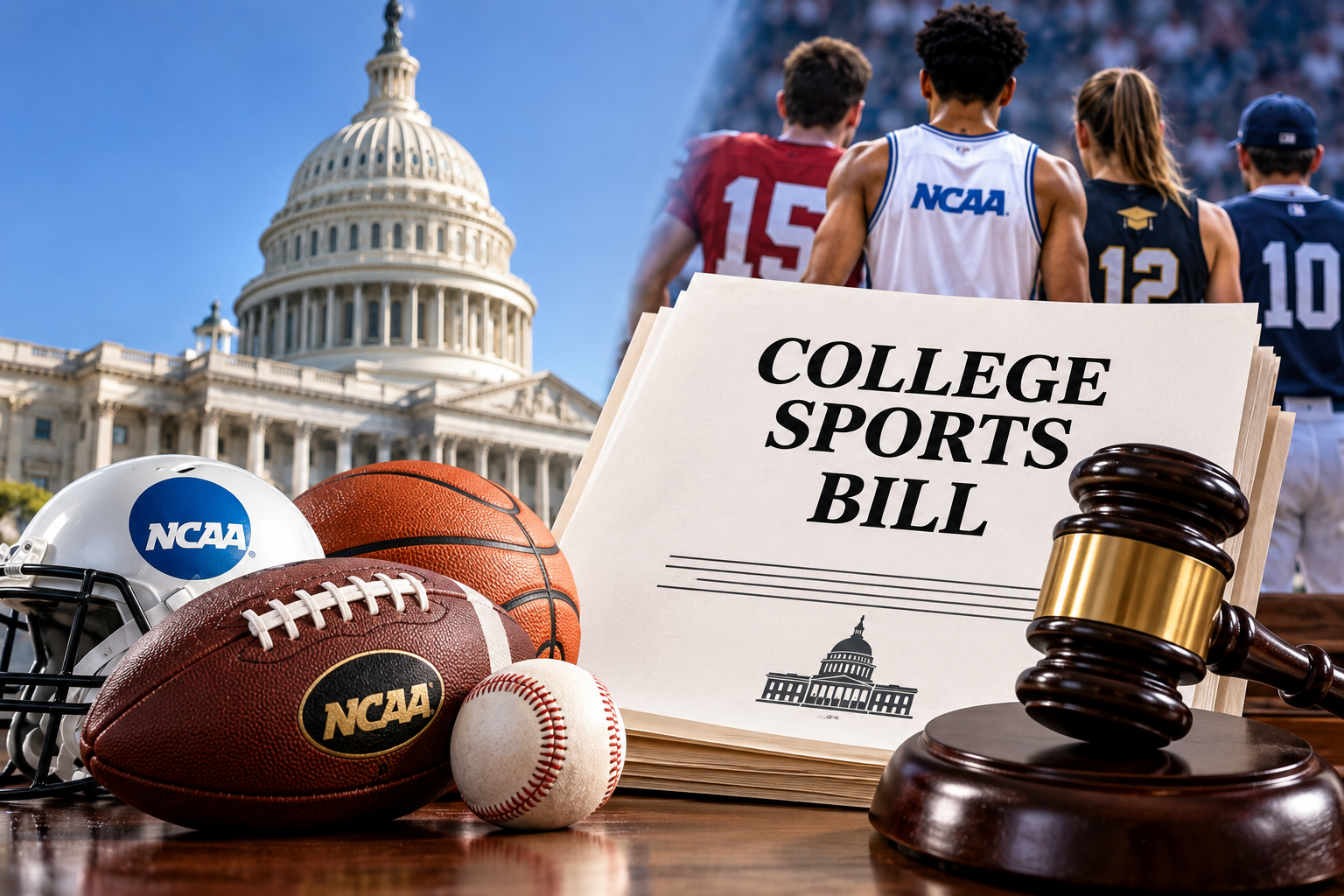
The U.S. Senate has approved a major bipartisan bill that could introduce sweeping new rules for college sports, including athlete payments, name, image and likeness (NIL) deals, transfers and eligibility.
The Protect College Sports Act passed the Senate by a 77-22 vote on September 28, marking a significant step toward establishing federal standards for an industry that has faced years of legal disputes and rapidly changing rules. The legislation was sponsored by Senators Ted Cruz and Maria Cantwell.
One of the biggest changes would involve how colleges share revenue with athletes. The bill would establish in federal law a system allowing schools to distribute a portion of certain athletic revenues directly to their players. The measure also includes a retention pool designed to give schools another way to keep athletes on their rosters.
The legislation would also attempt to bring more consistency to NIL rules. Since the NCAA’s traditional restrictions on athlete compensation began breaking down, different states have adopted their own regulations, creating a complicated legal environment for schools and athletes. The Senate bill would establish national standards and override conflicting state rules.
Transfers are another major part of the proposed changes. Under the legislation, athletes would generally receive one transfer without having to sit out a season. Supporters of the provision say it could reduce some of the uncertainty surrounding the transfer portal, which has become a central part of college recruiting and roster management.
The bill would also establish rules concerning athlete eligibility. It would put the NCAA’s five-years-of-eligibility model into federal law, meaning Division I athletes would generally have five years to compete in college.
Another provision would affect coaches. The legislation would restrict coaches from leaving their schools for another program during the season, a measure that has been informally described as the “Lane Kiffin rule.” The bill would also allow college conferences to pool certain media rights, potentially changing how television and sponsorship revenue is handled.
Athlete protections are also included. The legislation would provide scholarship guarantees and extend certain medical coverage after an athlete’s eligibility ends. Reuters reported that the bill would guarantee scholarships for up to 10 years after eligibility and provide medical coverage for five years after an athlete’s college career. It would also prevent scholarships from being revoked because of injury or athletic performance.
However, the legislation has drawn opposition from some athletes’ advocates, lawmakers and organizations. Critics have raised concerns about limits on athletes’ ability to challenge NCAA and school policies through lawsuits. Some major conferences, including the SEC and Big Ten, have also expressed concerns about parts of the legislation and called for changes.
The Senate vote does not make the bill law. It must still pass the House of Representatives before it can reach President Donald Trump for consideration. The House is expected to take up the legislation after the November elections, leaving uncertainty over whether the Senate-approved version will ultimately become law.
If enacted, the Protect College Sports Act would create a more standardized national framework for college athletics, potentially changing how schools compensate athletes, manage transfers and operate their sports programs.







 Entertainment2 months ago

 Tech2 months ago

 Entertainment2 months ago

 Politics2 months ago

 Sports2 months ago

 Fashion2 months ago

 Entertainment1 month ago
You must be logged in to post a comment Login